
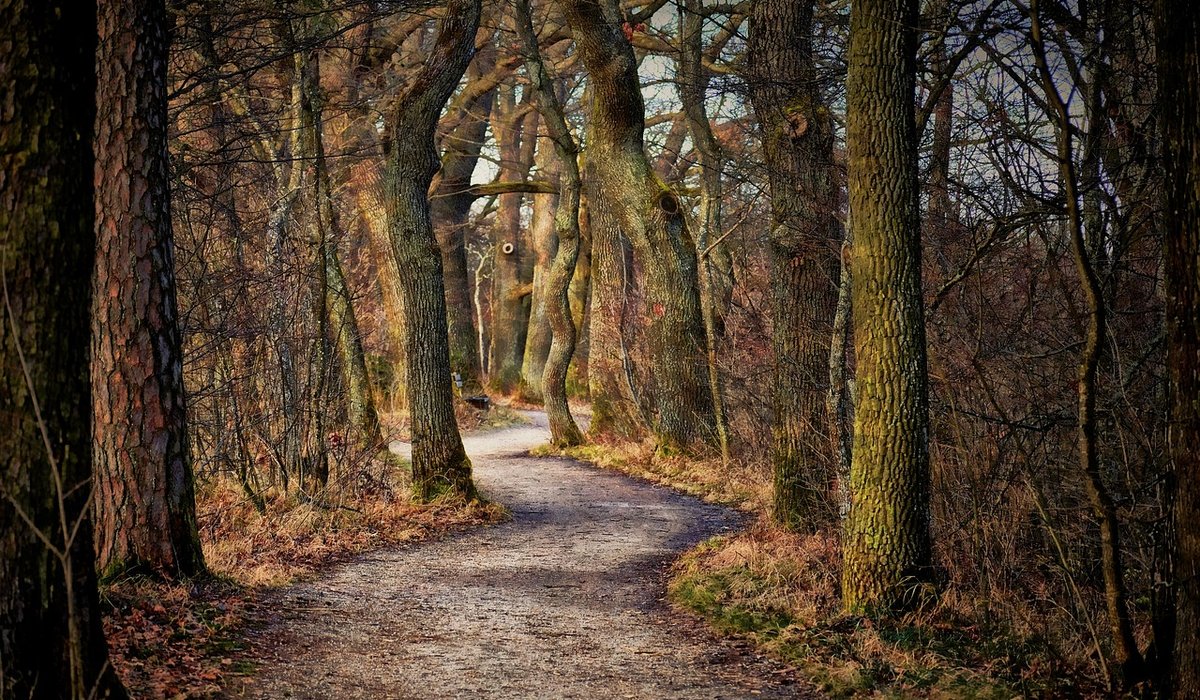
Exploring Ancient Woodland Paths in Spring
Why Ancient Woodland Feels Different in Spring
Ancient woodland is land that has been continuously wooded since at least 1600 in England and Wales, or 1750 in Scotland. That long continuity shows in the details: sprawling coppice stools, boundary banks and ditches softened by centuries of leaf litter, and a ground flora that simply does not appear in newer plantations. Dog's mercury, wood anemone, sanicle and, in the richest woods, herb paris are all clues that you are walking through something genuinely old.
Spring is when that age becomes visible. Before the oak, ash and hazel canopy closes overhead, sunlight reaches the woodland floor and the whole place moves quickly. Wood anemones open in March, ramsons fill the air with garlic, and then the bluebells arrive. The window is short, which is exactly why a spring visit feels like an event rather than a stroll.
Timing Your Visit to Catch the Bluebells
Native bluebells generally peak between mid-April and mid-May. Woods in the south and west of the UK tend to run earlier; upland and northern woods can be two or three weeks behind. A warm, damp April will bring them on quickly, while a cold snap holds everything back.
Aim for early morning, ideally within an hour or two of sunrise. The light is low and slanting, which makes the blue haze read far better in photographs, and the birds are in full voice. Late afternoon works well too, but avoid the middle of a bright day when the colour washes out. Check the forecast and pick a still, mild morning after rain if you can — damp air holds scent and sound beautifully.
Footwear and Kit That Actually Works
Ancient woodland soils are often heavy clay, and spring paths can be genuinely slippery. A few practical choices make a real difference:
- Walking boots or trail shoes with deep tread rather than smooth-soled trainers. Roots and wet clay demand grip.
- Waterproof socks as a backup if your boots are borderline — far better than cold, wet feet three miles from the car.
- Wellies for short stops only. They are fine for a 20-minute wander but a poor choice for a longer walk on uneven ground.
- A single walking pole if you have dodgy knees. Hidden roots and half-buried stones are the main hazards.
- Layers and a light waterproof. Woodland microclimates are cool and humid, even when the forecast is mild.
- Long trousers and tick awareness. Tuck trousers into socks in rough grass, and check yourself thoroughly afterwards.
- Binoculars and a small notebook if you want to identify what you are hearing rather than just enjoying it.
Reading the Wood: Birdsong and Wildlife
The dawn chorus peaks in late April and early May, and the first hour after sunrise is the finest listening of the year. Start with the simple ones: the two-note chiffchaff, the descending willow warbler, the rich fluting of a blackcap. A song thrush repeating each phrase two or three times is unmistakable once you know it, and a drumming great spotted woodpecker carries a long way on still air.
Look as well as listen. Nuthatches run down tree trunks headfirst; treecreepers spiral upwards. Roe and fallow deer move quietly through the undergrowth, and muntjac bark like small dogs. On sunny south-facing edges in April, adders may be basking on dead bracken — watch your footing and give them space. Badger setts are marked by spoil heaps and well-worn paths, and holes high in old trees might belong to owls or stock doves.
Treading Lightly in Fragile Habitats
Bluebells grow slowly from seed and can take several years to flower, so a single misplaced boot can damage a patch that will not recover quickly. Trampling also compacts the soil, which harms the bulbs beneath. Stay on the path even when it is muddy, and walk in single file through narrow sections rather than widening the mud.
Uprooting wild plants without the landowner's permission is illegal, and bluebells in particular are protected from sale. Photographs last longer anyway. Keep dogs on leads between March and July, when ground-nesting birds and young deer are vulnerable. Take litter home, including fruit peel, and never leave dog waste bagged on a branch — it is worse than leaving nothing at all.
Choosing a Gentle Local Trail
You do not need a famous wood. A two to five kilometre waymarked loop on a local nature reserve, a community woodland or a permissive path is often enough. Look for routes that follow a stream or a shallow valley, where the ground stays workable and the bluebells tend to be thickest.
Allow an hour or two rather than racing round, and check the reserve noticeboard for closures or sensitive areas. If a path is signed as closed for regeneration, respect it — those small exclusions are why the rest of the wood looks so good. Go quietly, go early, and let the wood set the pace.
tag: Walks

Eleanor Whitcombe Author
Learn to tell robins, blackbirds and great tits apart using their calls, with practical listening exercises for early mornings.
YOU MAY ALSO LIKE

Identifying Common British Garden Birds by Song
Sep 15
10Join community efforts to remove litter and improve water quality, helping otters, kingfishers and native plants thrive again.
read more
Supporting Local River Clean-Up Projects in Your Area
Sep 13
10Leave seed heads, build log piles and avoid tidying too much to give insects, frogs and birds safe winter shelter.
read moreWildlife
-

ERRIC CATONA
Keep a simple nature diary to record rainfall, wind and temperature, noticing how wildlife responds to changing conditions.
May 19, 2016 at 5.12 pm
Reply
ERRIC CATONA
These ancient boundaries support dormice, bats and butterflies; learn why thick, diverse hedges matter for British farm landscapes.
May 19, 2016 at 5.12 pm
Reply -
ERRIC CATONA
A small garden pond can become a valuable breeding ground for amphibians, attracting dragonflies and providing year-round interest.
May 19, 2016 at 5.12 pm
Reply
Countryside
Your email address will not be published.